“For this reason, Christ is the mediator of a new covenant, that those who are called may receive the promised eternal inheritance–now that he has died as a ransom to set them free from the sins committed under the first covenant.” Heb 9:15 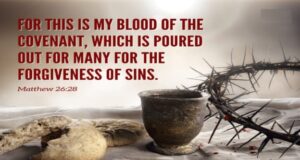
The “new covenant” is the new agreement God has made with mankind, based on the death and resurrection of Jesus Christ. The concept of a new covenant originated in the book of Jeremiah that God would accomplish for His people what the old covenant had failed to do (Jer 31:31-34 & Heb 11:7-13). Under this new covenant, God would write His Law on human hearts.
“The days are coming,” declares the Lord,
“When I will make a new covenant with the people of Israel
and with the people of Judah.
It will not be like the covenant I made with their ancestors
when I took them by the hand
to lead them out of Egypt, [Old Covenant]
because they broke my covenant,
though I was a husband to them]” declares the Lord.
“This is the covenant I will make with the people of Israel
after that time,” declares the Lord.
“I will put my law in their minds
and write it on their hearts.
I will be their God, and they will be my people.
No longer will they teach their neighbor,
or say to one another, ‘Know the Lord,’
Because they will all know me,
from the least of them to the greatest, “declares the Lord.
“For I will forgive their wickedness
and will remember their sins no more.”

This prophecy is fulfilled in Jesus Christ’s blood covenant — the New Covenant. The cross divides the Bible into two covenants: the Old and the New. Under the Old Covenant, everything was conditional, even God’s love. It functioned as a blessing-and-cursing system based on human performance. But in the New Covenant with Jesus Christ, we are blessed with every spiritual blessing because of His obedience and finished work (Eph 1:3). Forgiveness, righteousness, holiness, and wholeness are now gifts given by grace and received by faith — not earned by what we do.The key shift is from performance to promise. In the Old, the standard was “do and live.” In the New, it’s “believe and receive,” because Christ fulfilled everything on our behalf.
That’s why Paul calls it “the ministry of righteousness,” which far exceeds the ministry of condemnation (2 Cor 3:9). Christ’s death ushered in this better covenant, under which we are justified by God’s grace and mercy, and true forgiveness of sins is now possible with absolute peace between God and humans. Because Jesus Himself is the Mediator of this better covenant between God and man (Heb 9:15). His sacrificial death is the oath and pledge by which God sealed the covenant with us. The New Covenant is God’s new agreement with humanity, established through the death and resurrection of Jesus Christ. It fulfills Jeremiah’s promise that God would do what the Old Covenant could not — writing His law on human hearts instead of stone (Jer 31:33).
At the Last Supper, Jesus’ spoke of the cup and said, “This is My blood of the new covenant, which is shed for many for the remission of sins” (Matt 26:28). Luke records it as
“The new covenant in My blood, which is shed for you” (Luke 22:20).
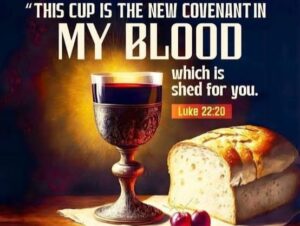
When Paul recounted the account, he received concerning the Last Supper, he quoted Jesus’ words about the cup as “the new covenant in My blood”
(1 Cor 11:25): “This cup is the new covenant in My blood; do this, whenever you drink it, in remembrance of Me.”
The Epistle to the Hebrews gives the New Covenant more attention than any other book in the New Testament. It quotes the entire passage from Jeremiah 31:31-34 in Hebrews 8 and refers to Jesus as “the Mediator of the new covenant” — a “better covenant established on better promises” that rests entirely on Christ’s sacrificial work (Heb 8:6, 9:15, 12:24). The New Covenant accomplished what the Old could not: the removal of sin and the cleansing of the conscience (Heb 10:2-22). Through Jesus’ work on the cross, the Old Covenant has been made “obsolete” (Heb 8:13), fulfilling the promise Jeremiah prophesied. The New Covenant in the blood of Jesus Christ is for all mankind. It was God’s eternal plan, from eternity past to eternity future.
SUMMARY,
Yes, the cross changed everything — but it did not change the nature of God. He is eternal and unchanging. He didn’t think, “That first covenant was a disaster, so I’d better try something new.” The New Covenant was His plan from the beginning. That’s why Scripture calls it the “eternal covenant” (Heb 13:20), while describing the Old Covenant as temporary and now obsolete (2 Cor 3:11, Heb 8:13). The Old Covenant wasn’t a trial run while God was still figuring things out. It was a deliberate, temporary arrangement where God restrained the full expression of His loving-kindness toward Israel so they would become aware of the depth of their sin and their desperate need for a Savior (Rom 3:20, Gal 3:24).
Key distinction: The Old Covenant revealed the problem of sin.
“So, the law was put in charge to lead us to Christ that we might be justified by faith” (Gal 3:24).
And the old Covenant was based on what we must do, where the New Covenant was based on what Christ has already done.
Unlike the Mosaic Covenant, the New Covenant of Jesus Christ is for all mankind — regardless of race, background, or status. In the Great Commission, Jesus sent His apostles into the entire world to proclaim the message of the cross (Luke 24:46-47, Matt 28:18-20). You and I have been entrusted with the Great Commission from our Lord Jesus Christ — to carry this Gospel, the Good News, to the ends of the earth. The Gospel call now extends to every man and woman today. And the Loving savior, embraces you with His everlasting love in the everlasting covenant, sealed by His eternal blood. So dear child of God rest and trust in Him who made this available for you and has secured you in it with its entire privilege.
Now can you see the beauty of it? It is this: the Law exposed our inability to save ourselves, while the New Covenant reveals God’s ability to save us completely through Christ. That’s why we can enjoy every spiritual blessing in Christ without striving. That’s why we are in Christ and Christ in us, enabling us to reign in life through Him!